
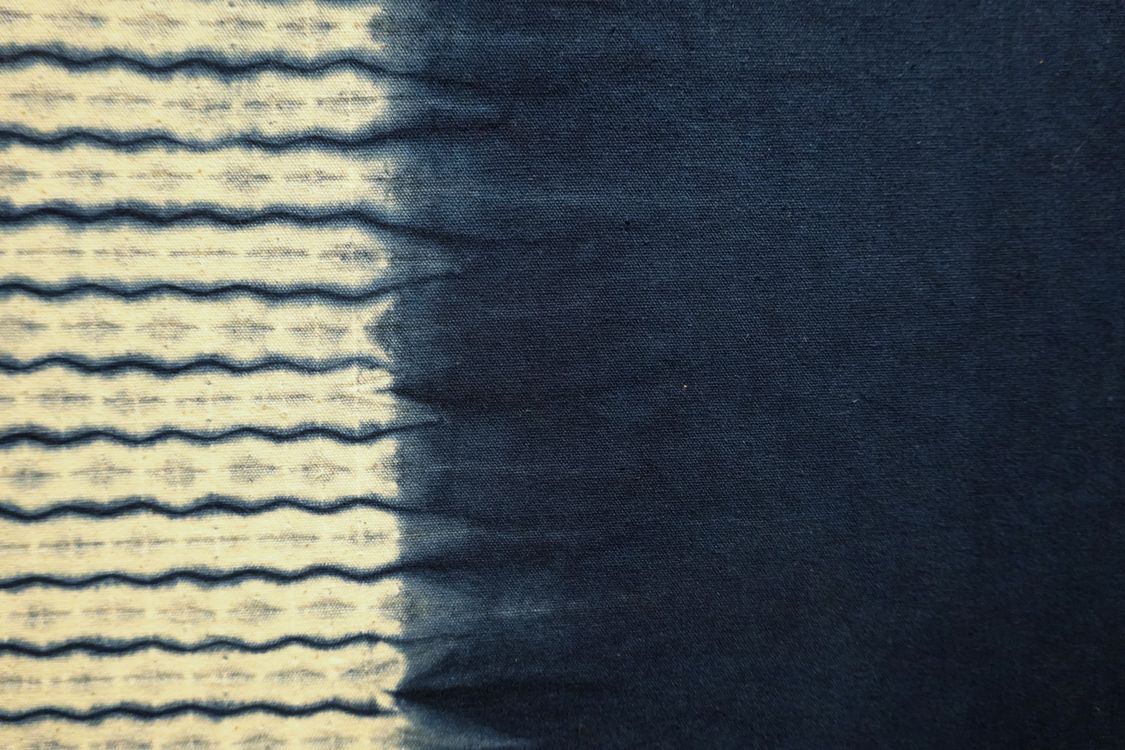
Wave-like patterns and the surface texture of indigo-coloured cloth. Photograph: Cc Liu / Pexels.
The history of natural dyeing reaches back to small traces of fibre preserved from prehistoric times. Colouring yarn and cloth with pigments obtained from plants, animals and other natural sources gave protective clothing another purpose: expressing individuality and identity. In this sense, natural dyeing was one of the early foundations of fashion as a form of self-expression.
Natural colours conveyed personal taste, but also signalled status and belonging. In some periods, particular colours were reserved for particular social groups. Elsewhere, patterns against a familiar blue background told a community's story. That history runs from prehistoric fibres through the power structures of antiquity, medieval trade and the fashions of the early modern world.
How far back does natural dyeing go?
Traces of coloured fibres date to the Upper Palaeolithic, long before written history. However, ancient fibre finds and textiles whose dyes have been chemically identified offer different kinds of evidence.
Wild flax fibres were found in Dzudzuana Cave in present-day Georgia, which people occupied from around 30,000 years ago. A study published in 2009 reported spun and knotted fibres, along with fibres interpreted as dyed, from several Upper Palaeolithic layers. These are not surviving complete garments, but they indicate that people were processing fibres and working with colour long before agriculture and cities emerged. [1]
More specific evidence of dye comes from Huaca Prieta on Peru's northern coast. Analysis of blue yarns in cotton textiles dating to about 6,000–6,200 years ago identified indigoid colourants. Blue yarns formed stripes alongside naturally brown cotton and white plant fibres, adding colour contrast to the construction of the cloth. The same study discusses indigo-dyed material from Egypt's Fifth Dynasty, around 4,400 years ago. [2]
These finds do not identify a single moment when fashion began. They do show how far back the use of colour and pattern in textiles extends. As such techniques were applied to clothing, garments became both a covering for the body and a means of expression.
Natural dyeing through time
Period | Representative places and evidence | What colour reveals |
|---|---|---|
Upper Palaeolithic | Flax fibres from Dzudzuana Cave, Georgia | Traces interpreted as fibre processing and dyeing |
Around 6,000 years ago | Cotton textiles from Huaca Prieta, Peru | Indigo colour and striped patterns |
Antiquity to Korea's Three Kingdoms period | Mediterranean, China and the Korean peninsula | Colours of authority and specialist dyeing organisations |
5th–14th centuries | Chinese textiles and trade between India and Egypt | Movement of dyes, techniques and patterns |
Mainly 16th–18th centuries | Mexico, Europe and East Asia | International fashions, court dress and everyday taste |
19th century | Discovery of mauveine in 1856 | The shift towards a synthetic-dye industry |
20th century onwards | Yoruba adire and other traditions | Industrial decline and survival largely through traditional crafts |
What did clothing colour mean in ancient societies?
In antiquity, the colour of clothing conveyed more than beauty. It reflected the resources and labour needed to produce it, as well as the wearer's power. The harder a dye was to obtain and use, the more valuable its colour could become.
The Mediterranean: purple from the sea, and the power to wear it
Tyrian purple is closely associated with the ancient Phoenician city of Tyre, in present-day Lebanon. Its source was not a flower or berry, but a secretion from marine snails found in the Mediterranean. Collecting large numbers of snails and processing the material made the colour difficult to produce in quantity. [3]
Expensive purple garments became associated with royalty, priests and nobles. In Rome, purple also came to represent imperial authority. The scarcity of a natural dye and the difficulty of making it had become a social symbol. A colour anyone can choose from a modern palette once signalled access to wealth and power. [4]
This purple was not one uniform shade. Raw materials and processing could shift it towards red or blue. What mattered was less an exact colour value than the resources and authority required to produce and wear it.
East Asia: silk, colour and specialist dyers
In China, techniques for transferring natural colour to cloth developed alongside silk weaving. The China National Silk Museum describes the widespread use of madder as a red dye from the Warring States period through the Qin and Han dynasties. Colours obtained from plant roots varied with the treatment of yarn and fabric. Dyers accumulated knowledge that went beyond applying a natural stain to producing a desired colour. [5]
Dyeing was also a specialised activity on the Korean peninsula during the Three Kingdoms period. Silla had separate offices such as Hongjeon, associated with red dyeing using materials including safflower, and Sobangjeon, responsible for sappanwood dyeing. The division of work among dye procurement, dyeing, washing and bleaching shows that coloured clothing required organisation as well as skill. [6]
Different regions obtained similar reds from roots, flowers or wood. Natural dyeing was not simply the story of one material spreading around the world: local resources and techniques created distinct cultures of colour. Some of the natural resources used as sources of colour today can be explored in GREENWEAR's biomass dyestuff guide.
How did natural dyes and dyeing techniques travel in the medieval world?
Medieval trade routes carried cloth and dyes, but also patterns and technical knowledge. Local traditions encountered materials from elsewhere, expanding the range of colours and designs available.
The Silk Roads: several regions within a single textile
Analyses of textiles from the 5th to 14th centuries presented by the China National Silk Museum identify or suggest a wide range of dyes: reds from madder and safflower, indigo blues, yellows from Amur cork tree and pagoda-tree flower buds, and purple from gromwell. Plants were not the only sources. Insect-derived reds included lac and Armenian cochineal. [7]
These findings connect sources of colour within China with South and West Asia. As colourants, patterns and weaving methods travelled together, textiles brought different cultures into the same object. The label “Chinese silk” alone cannot explain where every colour in a piece of cloth originated.
The insect dyes used in medieval Eurasia should be distinguished from the cochineal later traded from Mexico around the world. All produced reds from small insects, but their biological sources and places of origin differed. Similar colours could carry very different histories of materials and trade.
India and Egypt: red and blue cotton across the sea
Fragments of cotton cloth made in Gujarat, India, in the 13th and 14th centuries survive in Egypt. Often known as Fustat textile fragments, they record trade across the Indian Ocean and the Red Sea. Brightly coloured, patterned cotton was an attractive commodity far from its place of manufacture. [8]
Reds in these textiles were produced with madder-type dyes and mordants: treatments that help dyes bind to fibres. Blue patterns used indigo and resist techniques, which protect selected areas from dye so that the contrast between dyed and undyed cloth creates a design.
Mordanting to fix colour and resisting to keep it out gave dyers ways to plan patterns on cloth. Flowers, vines and geometric forms could be combined with red and blue grounds. Dyeing was a means of creating designs as well as producing colour.
How did natural colours express fashion and status in the early modern period?
From the 16th to the 18th century, dyes and textiles travelled over increasingly extensive networks. Natural colours marked rank at court, changed tastes in other countries and gave urban consumers ways to express individuality.
Mexico and Europe: a small insect and a global market for red
Cochineal was used in Mexico and elsewhere in Mesoamerica before Europeans arrived. The colourant came from small scale insects living on cacti. Local producers refined the quality of the dye through generations of cultivation and selection. Cochineal is an animal-derived natural dye, rather than a colour from red berries or wood. [11]
After Spain's conquest of Mexico in the 16th century, the dye entered large-scale trade with Europe and other regions. Capable of producing shades from bright crimson to deeper reds, cochineal was used in European court dresses and royal ceremonial clothing. Knowledge developed locally supplied a luxury colour to global markets.
This movement of dyes was more than an exchange of tastes. Colonial rule and commercial networks also shaped the circulation of colour. Behind a brilliant red garment stood both the skills of those who cultivated its raw material and the economic structures that moved it as a commodity.
India and Europe: lasting colour becomes fashionable
Indian chintz gained popularity in Europe and other markets in the 17th and 18th centuries. Chintz is cotton cloth decorated through painting or printing and dyeing. Indigo supplied blue, while chay root from southeastern India produced red; mordanting and resist techniques combined to create multicoloured patterns. [9]
Its appeal was not limited to unfamiliar floral designs. Bright colours that held well also mattered. Fabrics used for furnishings became fashionable as clothing. As demand grew, established European textile producers sought protection from imports. The ability to produce colour was changing both people's wardrobes and industrial competition. [10]
Indian chintz also travelled to Japan and Southeast Asia, bringing the same dyeing skills into different forms of dress and daily life. Durable colour made intricate designs practical to enjoy and helped turn natural colour into an international fashion. Colour retention remains important today; GREENWEAR's dyeing quality information explains how modern fashion fabrics are assessed.
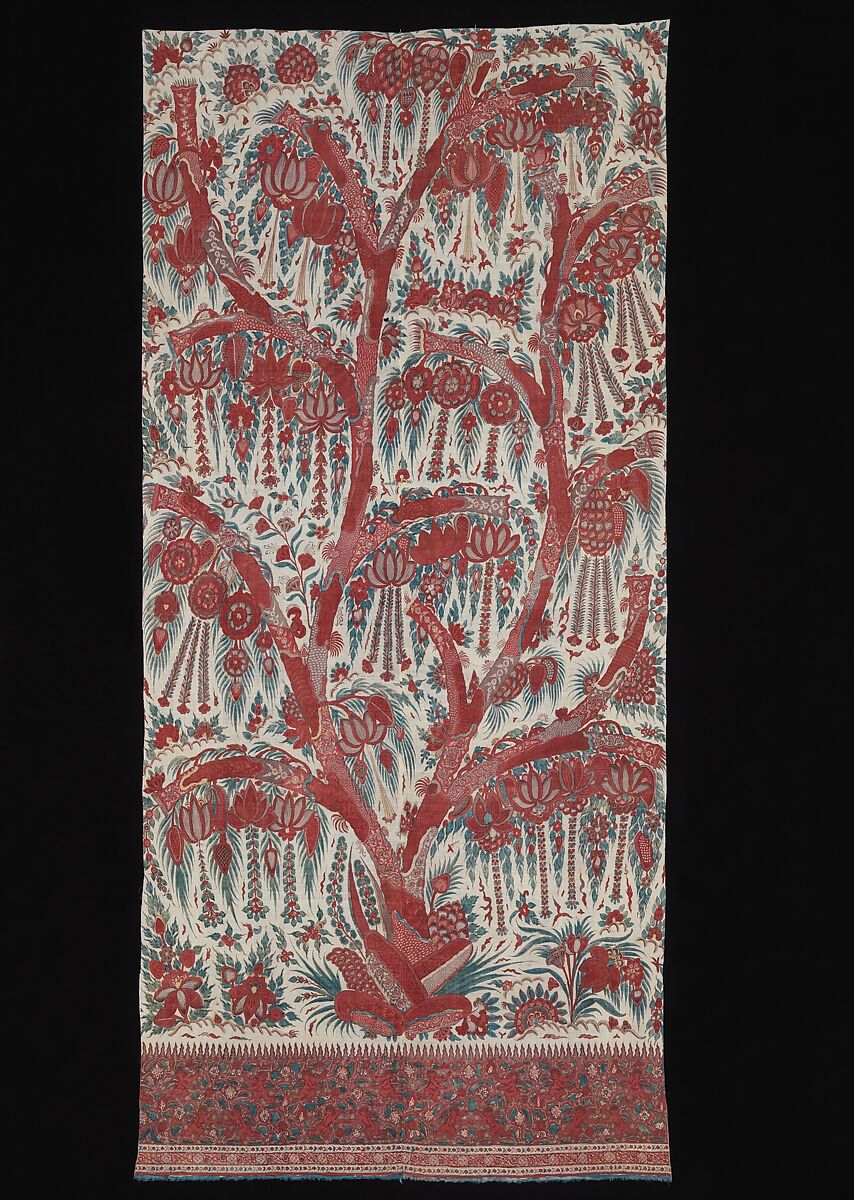
A late-18th-century Indian palampore. Mordant and resist dyeing create tree, bird and floral motifs on cotton. The Metropolitan Museum of Art, Rogers Fund, 1928, 28.30a–g.
China and Korea: reading court hierarchy through colour
At the Qing court, yellow was not treated as a single colour. Bright yellow worn by the emperor, empress and other members of the highest imperial ranks at formal ceremonies was distinguished from other yellows permitted to lower ranks and the blues of princes and officials. Subtle differences within a colour family could indicate the wearer's position. [12]
The materials used to make these colours were also documented. Research reconstructing court colours from Qianlong-period records used pagoda-tree flower buds for bright yellow, alongside natural dyes including safflower, sappanwood and indigo. A precious colour was not found ready-made in nature: it emerged from the selection and skilled treatment of materials. [13]
In late Joseon Korea, the king's bright red dragon robe and the crown prince's dark purplish-red robe distinguished their positions. Safflower supplied the bright red, gromwell the purplish red, while sappanwood and indigo were also important dye materials. The Sanguiwon, the royal wardrobe office, procured dyestuffs and oversaw dyeing. Court garments used more dye than ordinary clothing to obtain deep, vivid colours. [14]
Everyday white clothing in Korea coexisted with the many colours of court and ceremonial dress. Colour expressed taste while making social roles and formal distinctions visible.
Edo Japan: everyday blue and individual taste
In Japan, the growing use of cotton during the Edo period supported the spread of aizome, or indigo dyeing. Indigo worked well on cotton, and repeated dipping could produce shades from pale blue to deep navy. One family of dyes could give garments many different appearances. [15]
Firefighters' coats provide one example. Edo's commoner firefighters wore thick cotton garments dyed indigo on the outside, sometimes with heroic or mythological figures decorating the inside. Protective workwear also carried professional pride and a desire for self-expression. [16]
Urban merchants likewise expressed their tastes through kimono colours and patterns. Dress regulations coexisted with a strong desire to display fashion and wealth. Pattern books and ukiyo-e prints circulated styles, showing how people continued to make new choices within social rules.
What changed with synthetic dyes in the 19th century?
In 1856, the British chemist William Henry Perkin discovered the purple synthetic dye mauveine. A colour obtained while trying to synthesise quinine became the basis of a dye business, followed by further synthetic dyes and factories. Textile production, already expanding through the Industrial Revolution, gained a new way to supply colour. [19]
As synthetic dyes became more competitive in price, supply and consistency, natural dyeing—dependent on cultivation, harvests and multiple processing stages—gradually lost its central role in mass production. Traditions such as chintz had achieved outstanding colour, but the competition to supply consistent results efficiently and in volume shifted the industry's centre towards synthetic dyes. [5][20]
What became of natural dyeing after that shift?
As synthetic dyes became the industrial standard, natural dyeing declined sharply in mainstream textile production. Natural colours that had once sustained extensive trading networks lost ground in mass manufacturing. Traditional methods survived in more limited settings, including local workshops and skilled handcraft. [20]
Traditions such as Yoruba adire preserved knowledge of tying cloth or applying cassava-starch resists to create indigo patterns. Yet the survival of a craft culture did not restore natural dyeing's former industrial position. The skills remained as traditions to preserve; meeting the quality and production volumes of modern fashion remained a separate challenge. [17][18]
Why is GREENWEAR revisiting natural dyeing today?
GREENWEAR is revisiting natural dyeing to reduce fashion's environmental burden while meeting requirements for colour quality and productivity. The UN Environment Programme identifies wet processing, including bleaching, dyeing and finishing, as a major climate-impact hotspot in the textile value chain. With so many colours now available, how those colours are produced has become increasingly important. [21]
GREENWEAR has focused on bringing natural dyeing from the realm of traditional craft back into modern fashion production. It combines the longstanding practice of obtaining colour from nature with modern science to develop Biomass Natural Dyeing. Technically, improvements in colourfastness, levelness, colour reproducibility and productivity support the quality and supply capabilities required for contemporary fashion products. Explore GREENWEAR's technology.
Environmentally, lower-temperature, shorter processes reduce heating energy and carbon emissions. Raw-material and additive management lowers pollutant concentrations in wastewater and the use of synthetic additives. These improvements are outlined in GREENWEAR's published environmental performance. The long history of using natural colour to give clothing meaning continues in a new dyeing technology that addresses today's quality and environmental challenges.
Sources and further reading
2. Splitstoser et al., Science Advances (2016)
3. University of Michigan, Kelsey Museum · Ancient Color
4. University of Chicago Library · Tyrian Purple
5. China National Silk Museum · English exhibition guide (2018)
6. Academy of Korean Studies · Dyeing
7. China National Silk Museum · The Sources of Colors (2023–24 exhibition)
8. The Met · Made in India, Found in Egypt (2023)
9. The Met · Painting with Dyes in Early Modern South Asia (2016)
10. V&A · Indian Chintz – A Legacy of Luxury (2015)
11. Getty · How Mexico Gave the World Its Most Coveted Color (2021)
12. Smithsonian National Museum of Asian Art · Qing chaofu
13. Su et al. (2022) · Qing robe digital archive
14. Kim Soon Young (2013) · Dyeing culture in late Joseon court dress
15. Japan House London · Aizome Indigo Dyeing from Mashiko
16. The Met · Kimono Style (2022)
17. V&A · Àdìrẹ – tied and dyed indigo textiles
18. V&A · Africa fashion: cloth of a continent
19. Science Museum · Mauve Mania (2018)
20. Science History Institute · Blue Silk Dress (2026)
21. UNEP · Sustainability and Circularity in the Textile Value Chain (2020)